
Compounds
Compounds are grades in which the base polymer is pre-blended with glass fibre, mineral or flame retardant and can go straight into injection moulding. The Forbest Plastik stock programme includes 15% and 30% glass-fibre PA6 and PA66, PBT GF30, PPS GF40, POM GF25 and GF30, mineral-filled and glass-fibre PP, and flame-retardant PA6, PA66, PBT and PP in natural and black. Codes follow common industry naming; if there is a commercial grade you want to match, give its name and we will quote the equivalent with its technical data sheet.
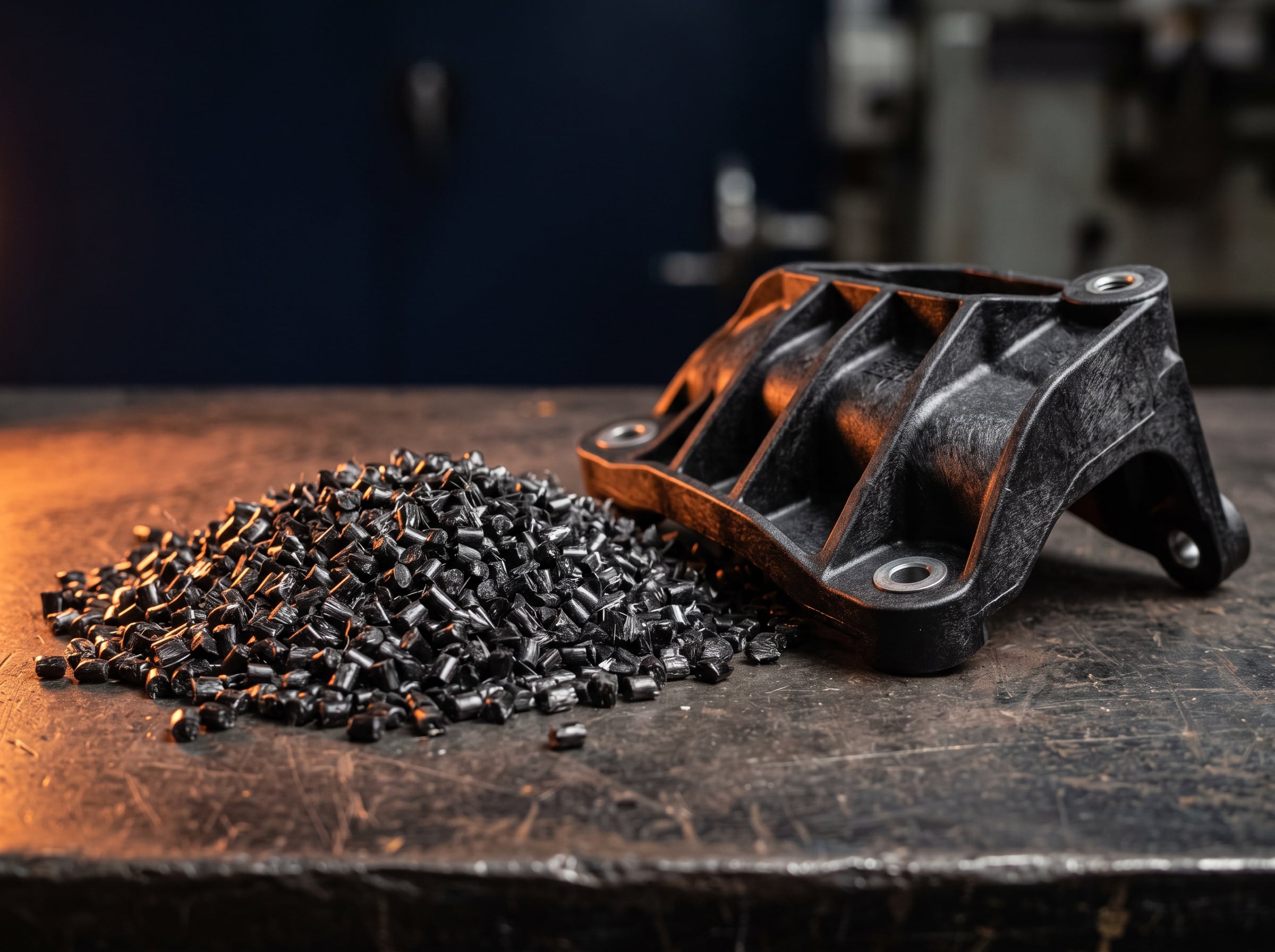 Representative image
Compounds
PBT GF30 NATPolybutylene terephthalate
30% glass-fibre reinforced, natural colour- Electrical insulation
- Chemical resistance
PBT GF30 BLACKPolybutylene terephthalate
30% glass-fibre reinforced, black- Electrical insulation
- Chemical resistance
PBT FRPolybutylene terephthalate
flame retardant (UL94 V-0 target)- Electrical insulation
- Chemical resistance
PPS GF40 BLACKPolyphenylene sulphide
40% glass-fibre reinforced, black- High heat resistance
- Chemical resistance
PPS GF40 NATPolyphenylene sulphide
40% glass-fibre reinforced, natural colour- High heat resistance
- Chemical resistance
PA6 GF15 NATPolyamide 6 (nylon 6)
15% glass-fibre reinforced, natural colour- Impact resistant
- Wear and slide
PA6 GF30 NATPolyamide 6 (nylon 6)
30% glass-fibre reinforced, natural colour- Impact resistant
- Wear and slide
POM GF25 NATPolyoxymethylene (polyacetal)
25% glass-fibre reinforced, natural colour- Wear and slide
- Chemical resistance
POM GF30 NATPolyoxymethylene (polyacetal)
30% glass-fibre reinforced, natural colour- Wear and slide
- Chemical resistance
No products match this search.
Try the material code (PA6, POM, TPU…) or the family (polyamide, elastomer); if it is not listed, ask via the quote form — our portfolio is wider than this list.
Request a quotePP MineralPolypropylene
talc-filled (20–40%) — stiff, dimensionally stable, automotive and appliances- Low density
- Chemical resistance
PA66 GF30 BLACKPolyamide 66 (nylon 66)
30% glass-fibre reinforced, black- High heat resistance
- Wear and slide
PA66 GF30 NATPolyamide 66 (nylon 66)
30% glass-fibre reinforced, natural colour- High heat resistance
- Wear and slide
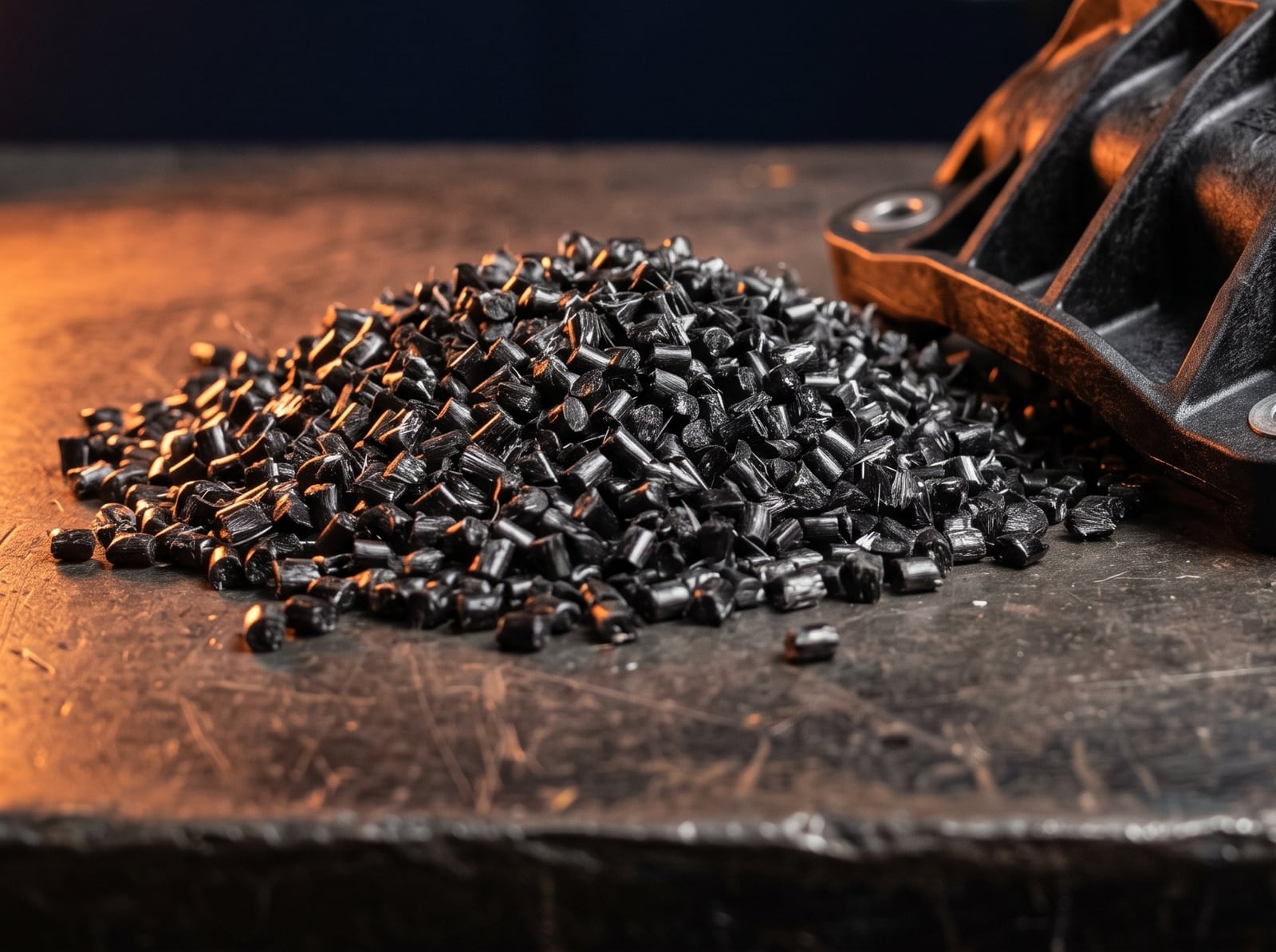
Product images are representative; actual colour and pellet shape vary by supplier.
Material families in this group
Different product codes from the same family (natural, black, reinforced) share the same base properties; the table below gives the family, its headline typical value and its most common use. Binding values are in the supplier data sheet sent with the quotation.
| Material family | Typical value | Common use |
|---|---|---|
| PBT Polybutylene terephthalate | Density: 1,31 g/cm³ · Melting point: 225 °C | Connectors, coil formers and relay housings |
| PPS Polyphenylene sulphide | Density: 1,35 g/cm³ (katkısız) · Melting point: 280–285 °C | Pump housings, impellers and valve parts |
| PA6 Polyamide 6 (nylon 6) | Density: 1,13 g/cm³ · Melting point: 220 °C | Gears, bushings and machine elements |
| POM Polyoxymethylene (polyacetal) | Density: 1,41 g/cm³ · Melting point: 165–168 °C | Gears, cams and mechanism parts |
| PP Polypropylene | Density: 0,90–0,91 g/cm³ · Melting point: 140–165 °C (tipe göre) | Food containers, closures and living-hinge packaging |
| PA66 Polyamide 66 (nylon 66) | Density: 1,14 g/cm³ · Melting point: 260 °C | Radiator tanks, intake manifolds, engine covers |
The right raw material is one quotation away.
Send the product code or application, quantity and process; the technical team defines the candidate material and sales replies with price, lead time and the data sheet.